Seattle sits on the Cascadia Subduction Zone, where several tectonic plates, like the Explorer, Juan de Fuca and Gorda, all vie for space beneath the North American plate. As a result, there have been earthquakes in the area’s history (the 1700 Cascadia earthquake) which sent a tsunami all the way to Japan. There are also other earthquakes that have occurred in 1949, 1965, and in 2001, the Nisqually earthquake.
The Nisqually Earthquake, as well as a major windstorm in West Seattle, is what inspired local Seattleites like Cindi Barker, one of the the original founders of Seattle’s Emergency Hubs, to get Seattleites together to organize and be prepared in case of an emergency. Listen to Cindi on the podcast or read on to get some tips.
What is a Community Emergency Hub?
A Seattle Community Emergency Hub is a pre-determined location where neighbors and community members are likely to gather to begin exchanging information and resources among themselves without outside assistance from city services.
How do I find a hub?
Check out their map which shows the locations. The image below will lead you to their map with one click. If your area doesn’t have a location, reach out to them to get one started!
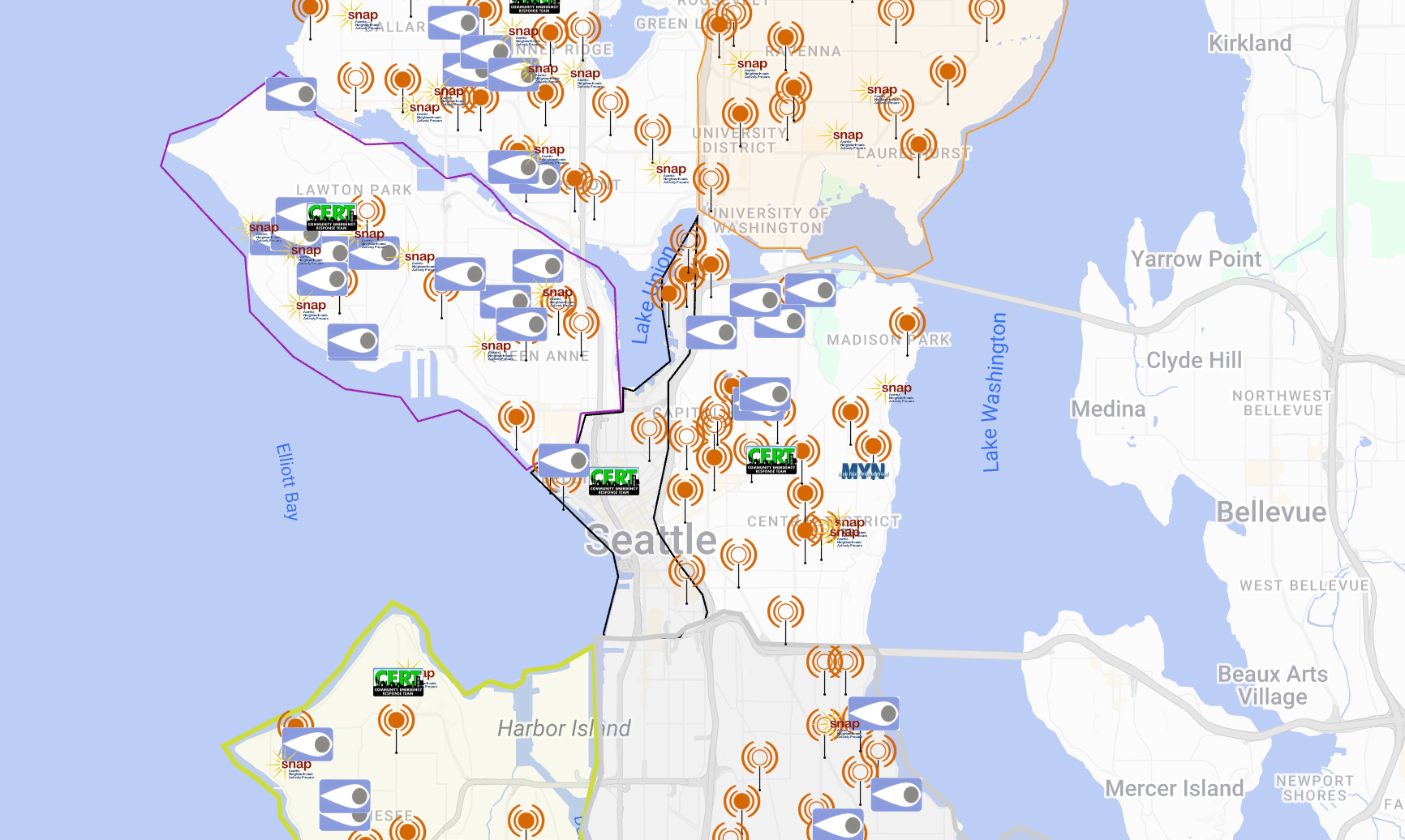
This is a preview of what the map looks like. (Seattle Emergency Community Hubs)
How can I prepare myself and my loved-ones for an emergency?
We live in a no-notice country. Meaning we won’t have any warning for a disaster or an earthquake. If one occurs, stores won’t be open. This means make sure you have:
- Water for at least 3 days
- Food for several weeks
- Stock up on important medications
- Have power back-ups for any thing that needs power (charge portable cell phone chargers) or any medical equipment
- Pick a spot to meet up in case of an emergency (a community emergency hub is a good idea)
If you have more tips for emergency preparedness, let us know!