|
| |  | There is no data currently available to show the impact of AI use by the Seattle Fire Department. (Ian Taylor / Unsplash) |
| Seattle Using AI To Analyze 911 Calls Without Disclosure | Seattle Fire Department (SFD) is contracting with Corti, a Denmark-based artificial intelligence company, to train AI on 911 calls and help decide if callers should be sent an ambulance or rerouted to the controversial nurse hotline. SFD has never disclosed this to callers. SFD and Corti signed a data-sharing agreement in 2019 and have been working together since then. [Seattle Times] | - Lack of transparency raises concerns: The use of Corti’s technology started with training AI on 911 calls and has grown over the years. In 2023, SFD started using live AI prompts to suggest which calls dispatchers should divert to the nurse line. This resulted in a 32% increase of calls being sent to the nurse line. There are no public disclaimers on the Fire Department’s website, and SFD does not have publicly available data on how using Corti has impacted outcomes for 911 callers. [Seattle Times]
- AI use sidesteps Surveillance Ordinance: Seattle’s surveillance ordinance mandates review of technologies that observe or analyze residents in ways likely to raise concerns about social justice. SFD’s AI use has not gone through this process. The ordinance, adopted in 2017, requires publicly posted surveillance impact reports, an equity impact assessment, and a surveillance usage review. This is especially important for AI use in the medical field, where research shows the potential for biased treatment depending on race, gender, and socioeconomic class. [Seattle Times]
- More local governments lean on AI: The 911 agencies for Snohomish and Kitsap counties recently began using AI agents to answer non-emergency lines. The Snohomish agency is also using an AI co-pilot for emergency calls. Critics expressed concern that budget constraints could lead more local governments to replace call line staffers with AI. It is unclear whether Corti is saving SFD money, since the department was unable to share a detailed accounting of what it’s paying Corti to The Seattle Times. The total annual cost is currently about $260,000. [Seattle Times]
|
|
|
|
| What Seattle’s Talking About |
| 🌲 Cascadia gets attention from NYT: Earlier this year, we discussed soft-secession on the podcast with journalist Andrew Engelson. That concept, along with the full spectrum of secession movements, is now gaining national attention. The NYT joined a poetry night hosted by Engelson, which focused on Cascadia. Engelson told Griffin, “We’re in an abusive relationship with the federal government. Divorce is a valid response.” [New York Times] | | ⛺ Sweeps increased during Wilson’s first five months: More than 2,000 tents were cleared in the first five months of Mayor Katie Wilson’s administration. Former Mayor Bruce Harrell swept about 1,700 tents in the first five months of 2025 and about the same number in the first five of 2024. The increase comes as Wilson failed to meet her stated goal to open 500 shelter beds by the World Cup. [KUOW] | | 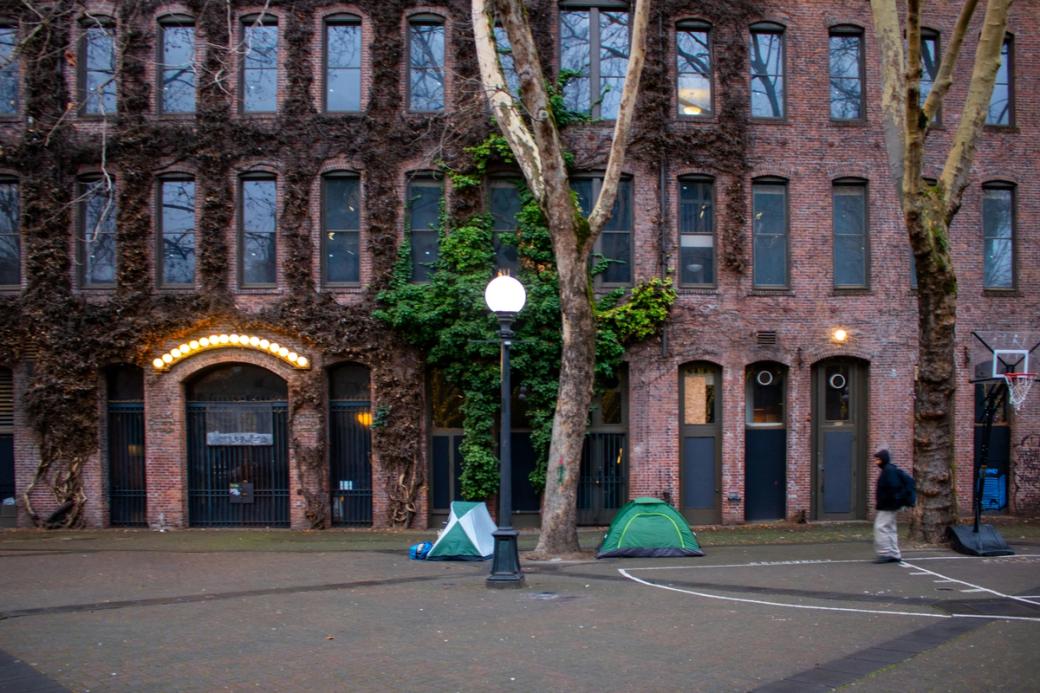 | Volunteers are asking if the increased number of sweeps seen under the Wilson administration are related to the World Cup. (Zoshua Colah / Unsplash) |
| 😅 How to survive the World Cup: The Stranger has put together a guide for locals and tourists alike to survive the next few weeks of World Cup excitement, chaos, and shenanigans. The guide includes a rundown of increased public transit options, things to do that are accessible from the stadium, and places to watch the matches. [The Stranger] |
|
|
|
|
|
|


