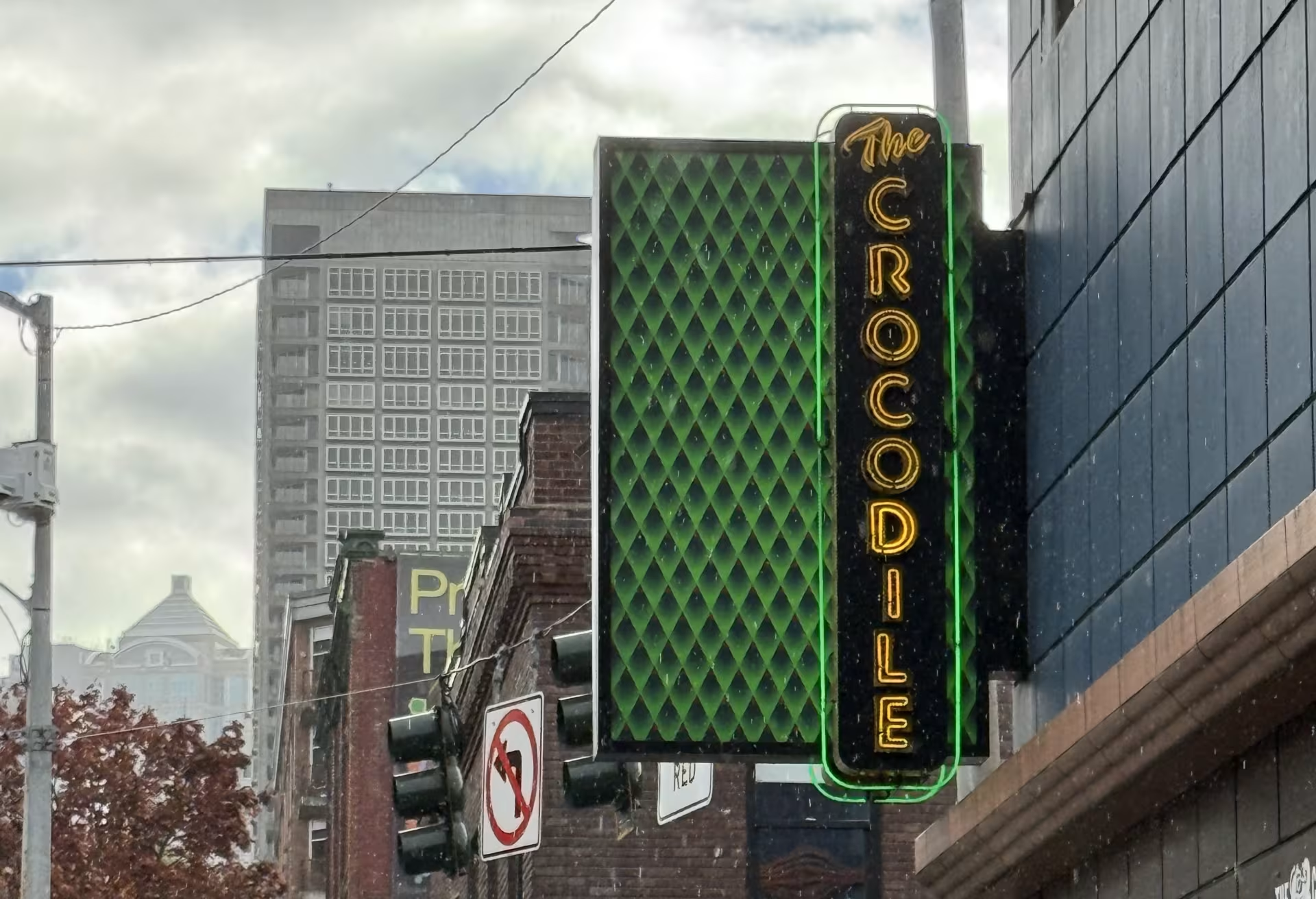
Lovers of smaller bands, comedy acts, and offbeat cinematic gems you can’t see anywhere else in Seattle will now be without two places to do so, as the Crocodile venues Madame Lou’s and Here-After will soon close their doors.
Staff at the Crocodile confirmed to City Cast Seattle that they were emailed by management last Monday about an all-hands meeting on Tuesday where the upcoming closures were then announced. The date for the closure is potentially as early as mid-December, though the calendars on the respective venues’ ticketing websites had shows until 2026 remaining up as of Monday morning.
In response to an inquiry from City Cast Seattle, management declined to comment.
The news represents a significant setback for what was supposed to be a period of vibrant new life for the Crocodile. In 2020 they announced they had hosted their last show at their original home in Belltown, the location where iconic local bands like Nirvana and Pearl Jam once graced the stage. The venue reopened in 2021 with a main 750-capacity showroom upstairs, the 300-capacity downstairs venue Madame Lou's, as well as the 100-seat theater and comedy club Here-After. Dropping the theater and comedy club is a considerable downsizing that will leave yet another gap in the arts for a city still trying to bounce back from the pandemic.
Leigh Bezezekoff, the Co-Director of the Washington Nightlife Music Association (WANMA), a trade organization for the state’s live music, performance and nightlife venue workers, told City Cast in an interview that losing these spaces hurts working musicians and audiences alike.
“It’s absolutely devastating. We were really excited about them opening and taking that leap to open a bigger space because it offered more diversity,” Bezezekoff said. “It’s heartbreaking when any music ecosystem loses their small rooms because that is a building ground for so many artists of all genres to work out, get experience on stages, connect with fans and build their fanbase.”
As much as this is a story of losing venues, it’s also part of a cost-of-living story. According to the first statewide music census released this month by WANMA, Washington’s musicians only earn 29% of their income from music, with nearly half of the state’s artists considering relocation due to housing costs. This is despite the music sector directly contributing $6.4 billion annually to the state’s GDP, which is nearly six times what’s contributed by spectator sports at $1.2 billion. Bezezekoff said this is but one data point of many capturing the perilous state of the industry.