A couple months back, I drove by the Pagliacci on Stone Way and couldn’t help but notice how… cool it looked. I know next to nothing about architecture, but the building looked vaguely brutalist to me, so naturally I skeeted something stupid.
I kept thinking about how the design, though, and I wanted to hear more about how all the Pagliacci’s came to look like they did. A little research led me to Richard Floisand of Floisand Studio Architects, who work with Pagliacci on the design and build of their locations. Richard and I met up at Pagliacci Silsul in Ballard to talk.
The History of Pagliacci Silsul
Richard explained it was built in 1939 as a curio shop. It sold Native American objects and had two totem poles that have their own history. The shop closed in World War 2, eventually became several different restaurants until Pagliacci opened in June 2022.
Pagliacci wanted to keep elements of the original so they consulted with Headwater People to understand the history of the building. To quote Richard, “when it feels like it's part of your neighborhood and it's always been there, you're going to be inclined to just embrace it more.”
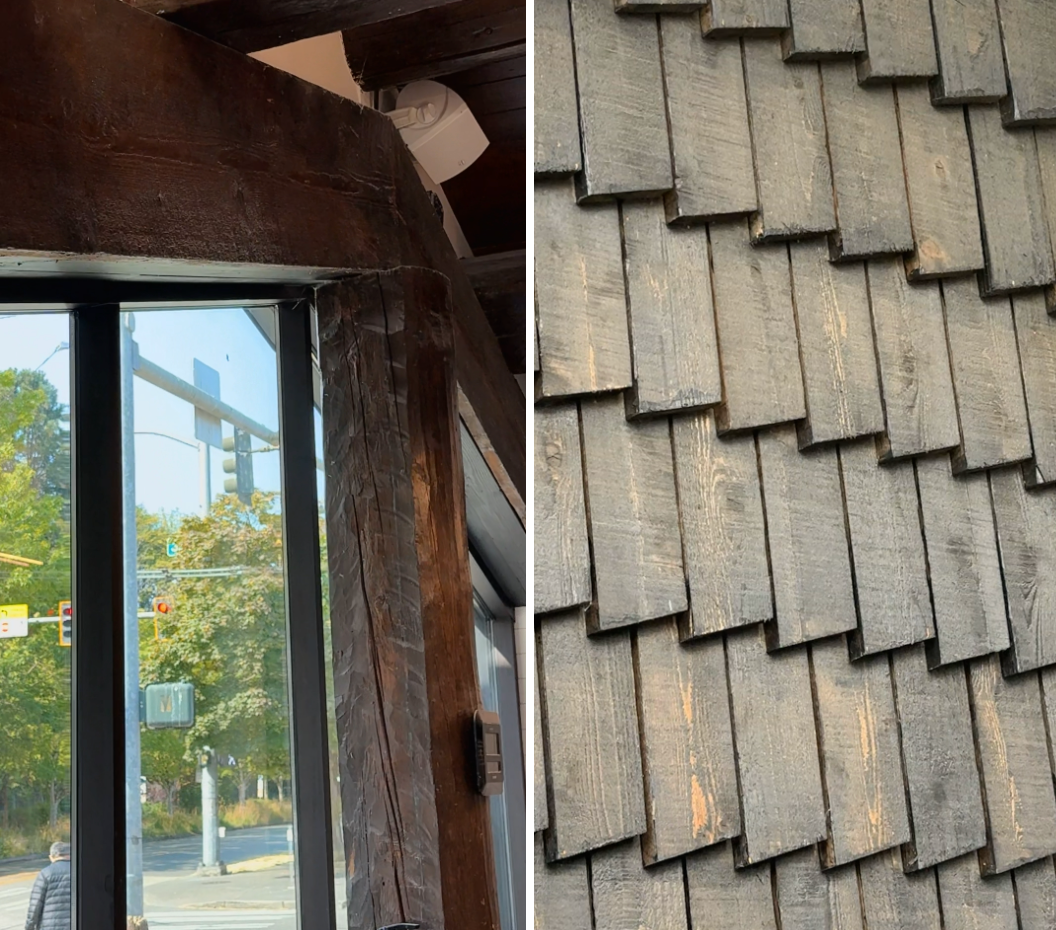
Oooh love a close up detail shot. (Liam Billingham / City Cast Seattle)
Original columns and Ballard shingles
Pagliacci kept the structure’s original logs, which were a replica of a six beam Haida house and are native to an archipelago called Haida Gwaii off of British Columbia. The shingles speak to the fact that Ballard was one of the largest shingle making locations in the West, and the shape is in the style of a Nordic house.
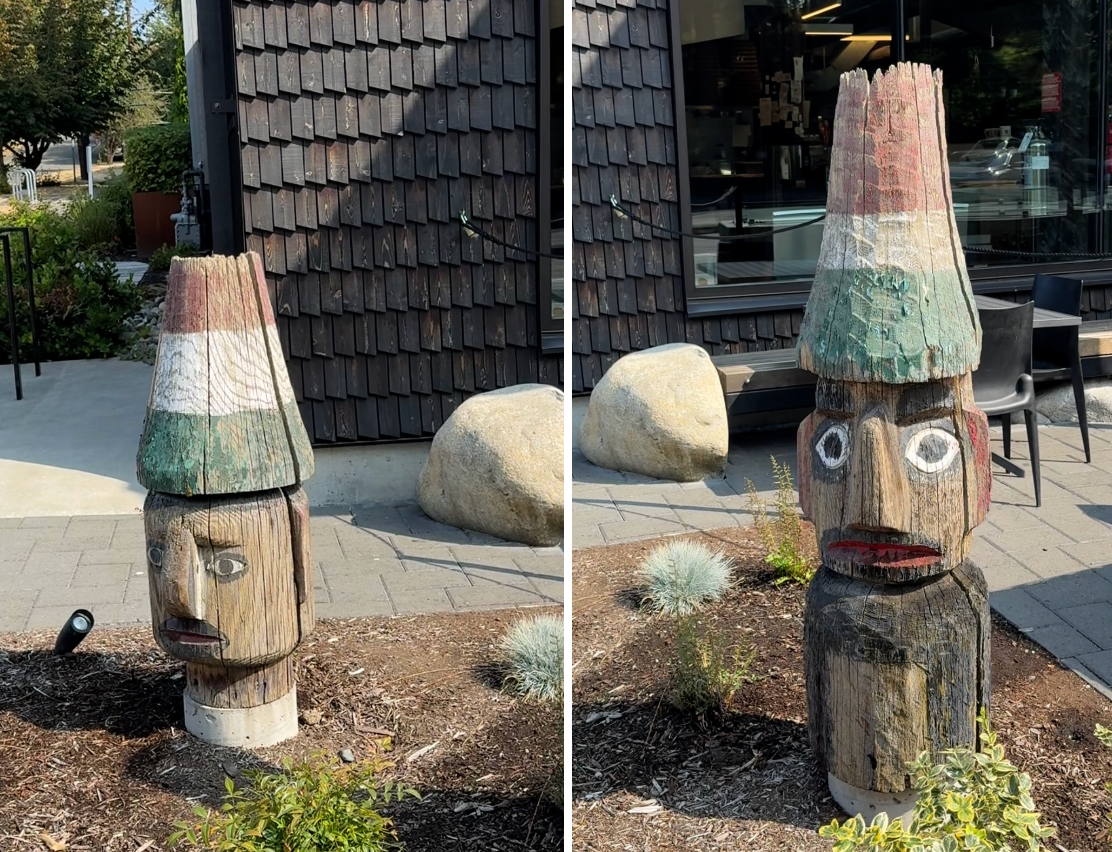
Aren't these cool? (Liam Billingham / City Cast Seattle)
Native totems
The totem heads are original and done by native carvers. They are going to go back into the Earth, as is one traditional way totem heads and poles are disposed of.
What’s a good story?
One last quote from Richard: “You're trying to tell a story about new and old..What's a good story? Hiding the past and pretending it wasn't there or actually saying, hey, this is really kind of interesting.”
To watch Liam's full video on Instagram, just click the image below.